Posts

Image
"I...uh...am a naturalist," I stutter to the person next to me at the bar.  I quickly chug a swig of beer as the person I'm talking to gives me a puzzled look.  "What kind of work do you actually do?" he inquires.  "I mostly do environmental education programs for youth and the general public," I respond, trying to sound astute and sophisticated.  "So do you like teach kids how to camp and fish and live out in the wilderness then?"  "Sort of," I respond.  "I focus more on teaching  about and engaging people in the natural history and ecology of a certain area," I reply.  "Oh...I see..." he says as he fades away to order another drink. It seems that many people do not understand what I do for a profession.   Part of the reason for this I think may be that my "profession" is one that is more causal and laid back; it is a form of recreation, leisure, science, and activism all mashed up into one enterpris...
Crossing the Great Divide (two of them, actually)

Image
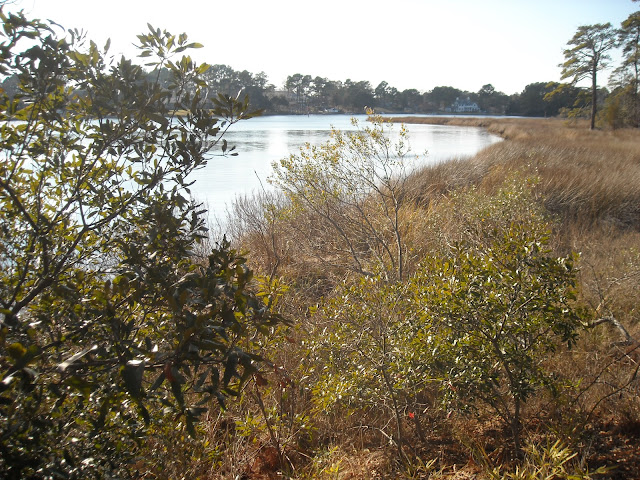
In just a few short weeks, I will be making my journey northwestward from the warm tidal area of the southern Chesapeake Bay towards the sandy and wind-driven dunes of the south shore of Lake Michigan.  In doing so, I will be crossing many political boundaries.  For a naturalist, though, I'll be crossing much more than just mere state lines and congressional districts, but I'll be traversing ecological boundaries. I will likely cross two major geological boundaries on my road trip to the Hoosier State of Indiana.  On the grandest scale, I will start off the in the Chesapeake Bay watershed and move across a great divide into the Mississippi/Ohio River watersheds.  A watershed is simply an area of land that sheds surface water (such as rain or snow) into a larger body of water.  For example, your gutters likely poor into a storm drain which empties out into a nearby stream, and then that stream drains to a river, which the...

I do not care...

Image
I do not care that I am living in a place I should not live.  I do not care that I am thriving in a cold and wind-driven barren. I do not care that there are no others north or west of where I reside.  I do not care that harsh salty sprays are trying to take me down.   I do not care about feeling pain or experiencing comfort.   I grow here because I can.   Southern Live Oak ( Quercus virginiana ) meets its northern growing range as far north as the Chesapeake Bay region of Virginia.  Live oaks are much more common in the deep south, but a climate moderated by Atlantic ocean sea breezes and a warm shallow bay permits these southern trees to thrive.  

Redbud

Image
 For anyone living in the eastern half of the United States who does not spend 100% of their time in a cave knows that we have had an early spring.  The cherry blossoms in Washington, DC for example bloomed over a month early.  This early spring also gave naturalists such as myself something to be excited about, as well:  spring wildflowers.  In fact, in a blog post last year , I could not help but show off some of the amazing wildflowers that bloomed around the hilly forests of Southern Ohio.  This season though, I don't want to overwhelm you too much.  I'm instead going to introduce you to Redbud ( Cercis canadensis ) .  Redbud is a common understory tree that is found in abundance along the margins of moist woods in the eastern United States, particularly in the more forested regions of the Ozarks, Appalachia, the Deep South, and the Mid-Atlantic (Sibley, 2009).  It is also a common ornamental tree, as it requires little watering and ma...

Virginia Pineapple? The fascinating family of Bromeliaceae

Image
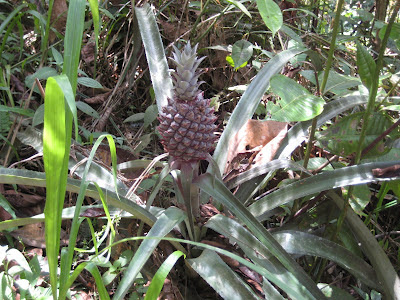
Who hasn't tried pineapple before?  It always seems to end up in fruit salads at family reunions, there's always someone in the crowed ordering "Hawain pizza", and the grocery stores always seem stocked full with showy pineapples displaying their rough-textured, compartmentalized skin with bizarre green leaves on top (Photo A).  To most people living in temperate regions such as most of the lower 48 United States, pineapples are nothing short of exotic and unusual - and not like anything we have growing in the wild on our landscape...or do we? Photo A:  A pineapple grows wild along a woodland edge in a tropical park in  Ecuador, South America. Pineapples are in the family Bromeliacea, which includes a large group of mostly tropical plants that are primarily  epiphytes - plants that grow on top of other plants (see photo B). Photo B: Bromiliads, shown in the center of this photo, are a common group of tropical ep...

The Origins of Doan Brook

My father first introduced me to the wild and rugged outdoors when I was very young.  He would take me on long hikes through vast marshes, steep gorges, extensive forests, and across scenic vistas…or at least that is what I thought at the time.  I grew up in an inner ring suburb of Cleveland, Ohio.  In fact, the Cleveland city line was only a few blocks from where I lived.  We lived in an aging tutor style house, with neighboring houses practically in arms reach away from the window of my bedroom.  As with any urban living scene, the rush of traffic was virtually continuous, with trains, sirens, and honking along the busy corridors of city life.  Sometimes some teenagers would drive past our house with the bass on their car’s stereo turned up so high it was as if we now had frequent earthquakes in Cleveland.  Nevertheless, within a walking distance from my house was a local nature center with hiking trails.  Most importantly, this nature center wa...