Posts

Coming Winter/Spring 2013: My Linkedin Page

For readers of my blog who are seeking qualified environmental educators, natural history interpreters, Geospatial analysts, GIS technicians, or GPS field technicians, stay tuned for my upcoming Linked page.   For now, please see my resume page of this blog site.   

It's a privet thing, okay? Controlling invasive privet at Hoffler Creek Wildlife Preserve

Image
Situated far back into the quiet and dull suburban subdivisions of Portsmouth, Virginia is a somewhat unexpected place; it is a place that easily breaks the monotony of neatly trimmed lawns and dated cookie-cutter houses.  The Hoffler Creek Wildlife Preserve protects one of the last remaining undeveloped tracts of land in the Portsmouth city limits (see map below).  This protects the water quality of the Hoffler Creek tidal estuary (see Photo A), and the land-areas of the preserve are filled with lush Mid-Atlantic maritime forest (Photo B). View Larger Map Photo A: The Hoffler Creek tidal estuary Photo B:  A milder climate and a lack of urban development has helped preserve the maritime forest community at Hoffler Creek Wildlife Preserve. In the middle of the wildlife preserve is a natural-looking, mostly freshwater lake (Photo C).  Prior to the establishment of the wildlife preserve, th...

There's beauty in a native berry

Image
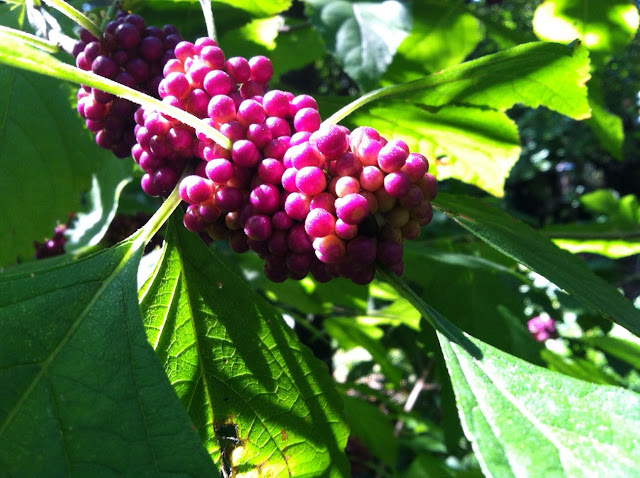
American Beautyberry ( Callicarpa americana ) is a wild growing shrub native to the southeastern United States.  Native plants provide an important food source for wildlife, and can also be attractive as landscaping plants.  Photo by Robert Palmer.  

Paradise or Hell? How tourism development can be both stupid and wonderful

Image
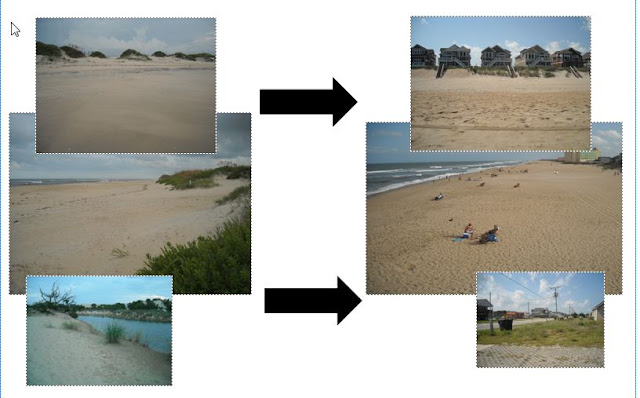
Environmentalists can be such pessimists.  They can (and often are) sheer "Debbie-downers" in their outlook on life and the environment - sometimes to the point of excess.  I can name more than a dozen moments within the last few months where I have been with a friend or family member out on a park or trail, where even at the happiest moments of our outdoor adventure I decide to bluntly bring up the problem of invasive species within the park, or how surrounding development is impacting bird populations, or how large predators have been eliminated from the region and how budget cuts may necessitate the closure of the park and how- well need I say more? I ran into this problem with myself again when I took some friends from out-of-town to the Outer Banks of North Carolina (see map below). The Outer Banks are a long, nearly continuous stretch of barrier islands composed of sand that run the length of North Carolina's coastline on the Atlantic...

Sand and Steel: My Summer Educating Urban Youth

Image
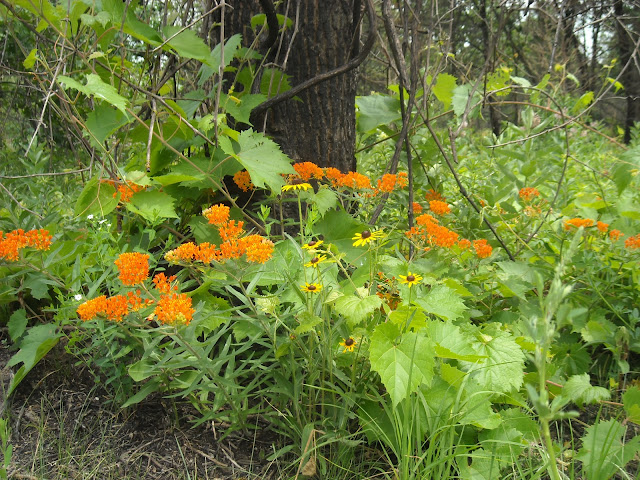
The opinions and commentary expressed in this blog post are my own, and therefore they do not necessarily represent the views and policies of the National Park Service, the Dunes Learning Center, or any affiliated organizations.   This past summer I worked as a naturalist with the Dunes Learning Center , a non-for-profit residential environmental education center and camp located within the Indiana Dunes National Lakeshore .  The camp and park are located in close proximity to the urban sprawl of Chicago and surrounding suburbs, where rapid development, high-impact industry, and economic decay have ravaged the region.  In between these blighted areas, however, are small pockets of gems.  Adjacent to rusty steel mills and putrid landfills are white sandy beaches, tall and wavy sand dunes, and a diverse array of colorful wildflowers (see Photos A and B and C) Photo A:  Butterfly weed and black-eyed susans in bloom in an oak-savanna ...

Notes: The Trouble with Thypha (Cattail)

Image
Introduction The following are some of my notes from a lecture I attended at the headquarters to a national park in Indiana on wetland restoration and cattail invasion.   Wetlands  are any area of land that is soaked with water for most of the year (but is not just open water such as in a lake).  Normally, wetlands have a diverse array of aquatic plants  such as various grasses, sedges, waterlilies, etc.  Within the last few centuries, however, many wetlands - both natural and man-made - are quickly giving way to a monoculture of cattail ( Thypha spp. ), a reed that frequently grows in shallow water (see Figure 1).  This lecture I attended discusses how and why cattail has become an invasive species, what people can do to monitor the situation, and how to control the invasion of cattail reeds. Figure 1:  Cattail reeds in a marsh.  Photo by Joy Marburger Cattail considered invasive since the 1950s. Cattail is in...

Parks RX: Parks and Trails for your Health and Sanity

Image
I remember traveling though an airport in Salt Lake City, UT and hearing the loudspeaker play a pre-recorded announcement reminding travelers not to smoke in the terminals, and that this rule was a apart of Utah's "indoor clean air" act. Cigarette smoke aside, I could not help but ponder the quality of indoor air in any public facility - including school classrooms, restaurants, and health clubs.  It almost seemed to me that indoor air quality was worse than outdoor air quality, including the air in urban and industrialized areas. Could the fact that our society spends large amounts of time indoors be a contributing factor for poor health?   Certainly our sedentary lifestyles are a culprit.  We sit inside and and watch TV, drive our cars to nearby places, hire carpenters to lift heavy household objects, other things to mitigate our need to perform physical labor.  Of course, this...